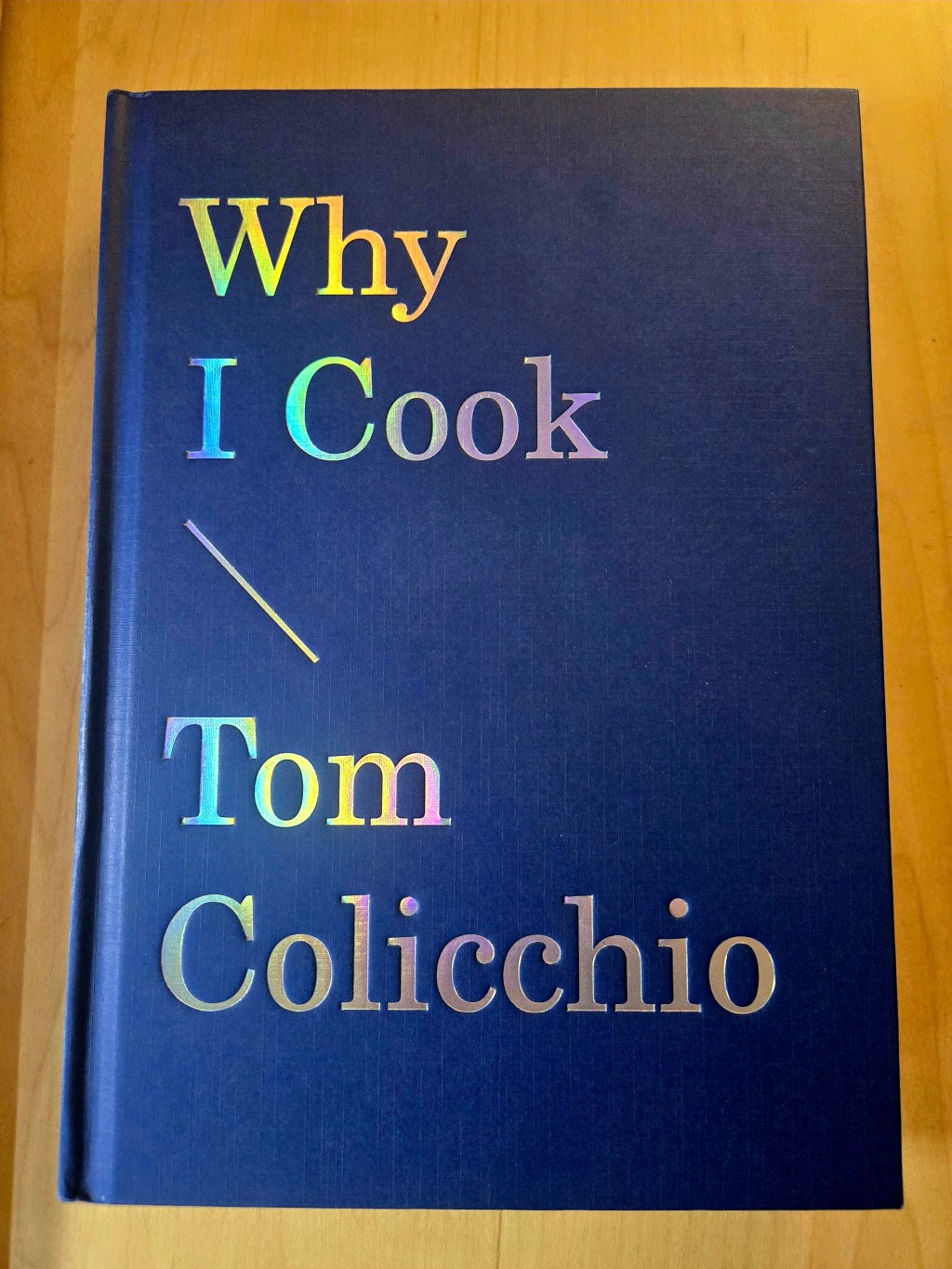
There are plenty of books out there about chefs—some tell wild behind-the-scenes stories, others dive deep into culinary technique. But Tom Colicchio’s Why I Cook is something quieter, more personal. It’s not about how to cook, or even what to cook—it’s about why we cook in the first place. And for someone like me, who finds peace, joy, and purpose in the kitchen, it felt like a conversation I didn’t know I needed.
Colicchio’s writing is thoughtful and reflective. It doesn’t follow a strict timeline or dramatic arc. Instead, it flows like memory—moving between childhood experiences, life in professional kitchens, and broader questions about food, community, and responsibility. He writes not just as a chef, but as a person who has spent decades learning how food shapes who we are and how we show up for others.
What struck me most was how much of the book is rooted in care. Colicchio talks about cooking as an act of love—something that’s not flashy or performative, but essential. He recalls his grandparents making meals with vegetables fresh from their own garden, how a simple meal brought people together, and how the best food moments aren’t always the most extravagant—they’re the most honest. I felt that deeply. Cooking, for me, has always been a way of taking care—of myself, of the people I love, of tradition.
But Why I Cook also goes beyond the personal. Colicchio spends a good portion of the book talking about food access and hunger in America. He uses his platform to advocate for change, reminding us that food is political, and that not everyone has the luxury of choosing fresh ingredients or sitting down to a home-cooked meal. This part of the book hit hard. It reminded me that cooking isn’t just about passion—it can also be about justice. That tension—between joy and responsibility—gives the book its emotional depth.
If you’re expecting a chef’s memoir full of restaurant gossip and recipe revelations, this isn’t that. It’s quieter and more meditative, more interested in meaning than entertainment. And honestly, that’s what makes it so powerful. It feels like a personal journal Colicchio is sharing with us, an invitation to reflect on our own relationship with food.
Reading Why I Cook made me think about all the little reasons I head to the kitchen every day: the comfort of stirring a pot of soup, the satisfaction of slicing into a loaf of bread I made from scratch, the way a home-cooked meal can make someone feel seen and cared for. It reminded me that cooking isn’t just a hobby or a skill—it’s a way of connecting, remembering, and offering something of ourselves.
In a world that often rushes past the table, Why I Cook is a quiet reminder to slow down, pay attention, and cook with intention. It’s a book I’ll be thinking about for a long time—and one I’ll likely revisit whenever I start to forget why I cook in the first place.







 Cups & Curiosity
Leave a comment