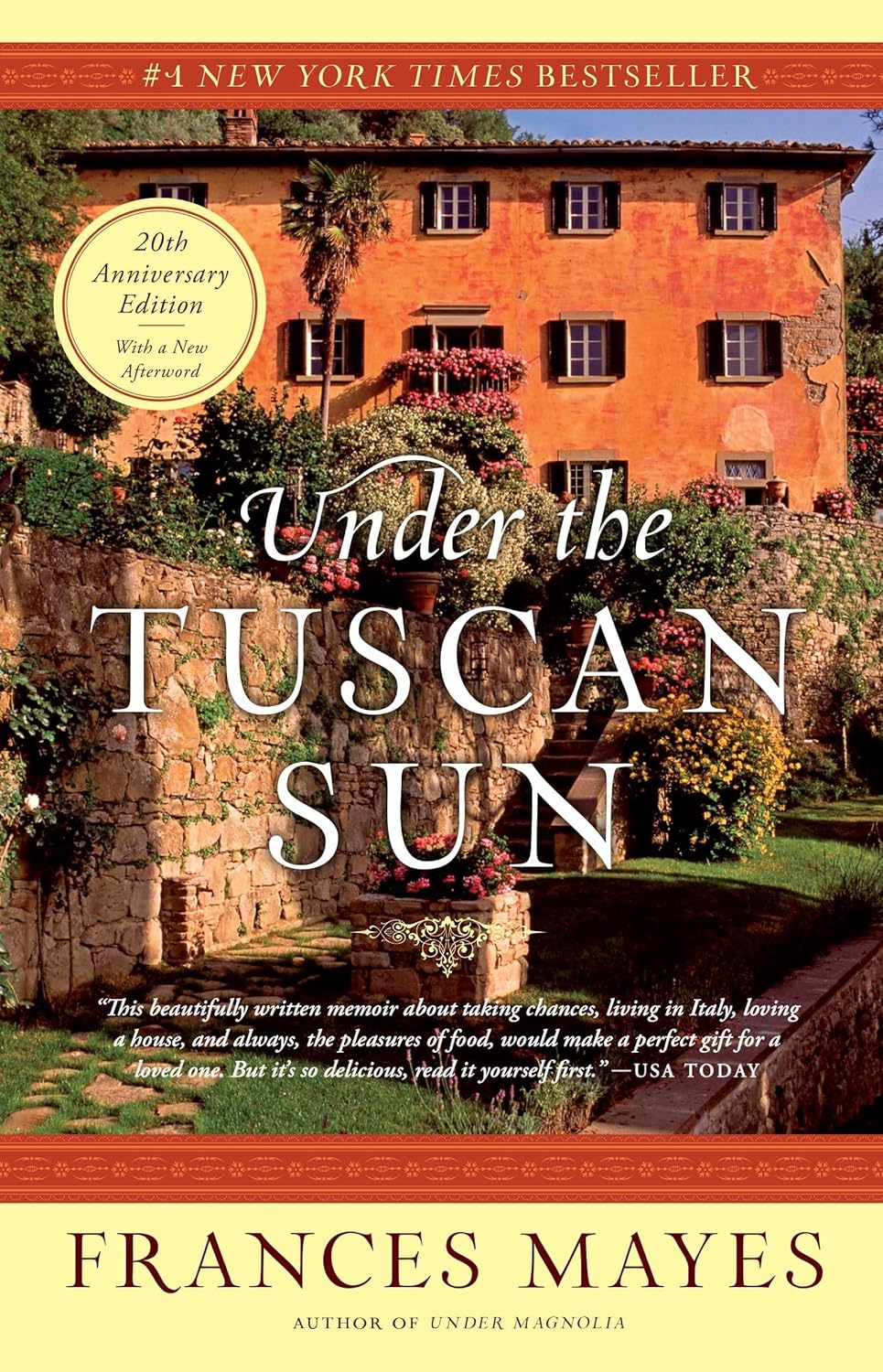
Finding Home and Self in Sun-Drenched Italy
Frances Mayes’ Under the Tuscan Sun isn’t just a travel memoir—it’s a sensory experience, an ode to reinvention, and a poetic meditation on place. First published in 1996, this beloved book tells the story of Mayes’ spontaneous purchase of a crumbling villa in Tuscany and the personal transformation that unfolds alongside its restoration. As memoirs go, it’s less about narrative arc and more about atmosphere, beauty, and the joy of claiming a life that feels authentically yours.
Mayes, a poet and professor, writes with a lyrical elegance that’s as rich as the food she describes. Each chapter reads like a carefully prepared dish—savored slowly and built with intention. There’s something especially grounding about the way she writes: tomatoes aren’t just ingredients; they’re sun-warmed jewels. Olive oil isn’t just a condiment; it’s a reminder that life can be simple and delicious if we let it.
What makes Under the Tuscan Sun stand out is its refusal to rush. There’s no climactic plot twist or dramatic crisis. Instead, Mayes gives us slow summers filled with renovation challenges, meals shared with friends, local festivals, and moments of stillness that come with planting a garden or watching a storm roll in over the hills. That’s part of the charm—readers are invited to settle in and appreciate a life that values time, patience, and presence.
But this book isn’t just about dreamy Italian countryside living. At its heart, it’s about rebuilding—both a home and a life. Mayes wrote this after a divorce, and while she rarely dives deeply into that pain, it lingers like an echo. Her move to Tuscany becomes an act of claiming joy again, of carving out space for solitude, creativity, and personal freedom. The villa, Bramasole, is both a physical and emotional restoration project.
Mayes also weaves in reflections on history, art, and Italian culture that give depth to the narrative. She explores Etruscan ruins, medieval town rituals, and the rhythm of a culture that, while unfamiliar, feels intuitively human. And of course, the food. Her descriptions will leave you daydreaming about homemade pasta, ripe figs, and the kind of dinners that stretch well into the night.
Is it idealized at times? Absolutely. Critics have pointed out that Mayes’ Tuscany is filtered through a romantic, privileged lens. And they’re not wrong. There’s little engagement with local socio-political issues, and the labor involved in renovating the home—often done by Italian workers—is viewed from a distance. But for many readers, the escapism is part of the appeal. It’s less a guide to Italy and more an invitation to imagine what might happen if you listened to your longings.
In the end, Under the Tuscan Sun is a book about more than just a house in Italy. It’s about creating a home within yourself. It’s about slowing down, tuning in, and daring to chase beauty even when life feels fractured. Whether you read it as inspiration, comfort, or pure escapism, one thing is certain—you’ll come away a little hungrier, a little dreamier, and maybe even ready to take a leap of your own.
The Movie: A Fictionalized, Romantic Reinvention
The 2003 film adaptation, starring Diane Lane, takes a much more traditional storytelling route. And while it’s inspired by Mayes’ memoir, it creates a fictional narrative to fill in the gaps: Frances becomes a recently divorced writer who impulsively buys a Tuscan villa while on a tour meant to help her recover from heartbreak. From there, the movie turns into a romantic dramedy filled with quirky side characters, misadventures, and—eventually—healing.
The film captures the essence of the setting beautifully: sunlit villas, rustic kitchens, cobbled streets, and sprawling vineyards. Visually, it’s a dream. Emotionally, it leans more into the idea of love lost and love found—not just romantic love, but also friendship, independence, and self-worth. It’s an uplifting, feel-good movie, even if it strays quite a bit from the source material.
Diane Lane’s portrayal of Frances gives the character warmth and quiet strength. And while the love story is much more central to the film than it ever was in the book, the heart of the story—rediscovering joy in the midst of pain—remains intact.
Under the Tuscan Sun is one of my ultimate comfort movies—the kind I return to whenever I need to feel grounded, hopeful, or simply wrapped in warmth. There’s something so soothing about watching Frances rebuild her life in such a beautiful, sun-drenched place, surrounded by good food, unexpected friendships, and the quiet magic of starting over. Even though I know how it ends, I always find new meaning in her journey—especially the way she learns to find joy on her own terms. It’s like a cinematic exhale, reminding me that even when things fall apart, something beautiful can still be waiting just around the corner.



 Cups & Curiosity
Leave a comment