Dark Humor, Grief, and the Strange Comfort of Connection
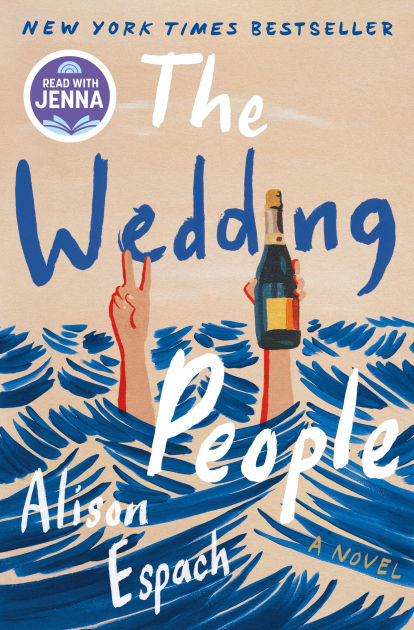
I recently read The Wedding People by Alison Espach with my book club, and it turned into one of those reads that quietly settles into your chest and stays there. You know the kind, the book you don’t immediately rate or categorize because you’re still untangling how it made you feel. Marketed as hilarious, this novel is often positioned as a comedy, but that label doesn’t quite fit. It’s not laugh-out-loud funny. Instead, it’s deeply sarcastic, dry, and threaded with dark humor that sneaks up on you in moments when you least expect it.
This is a book that understands how grief can sharpen your observations, how loss can make the world feel simultaneously absurd and unbearably loud. Espach’s humor isn’t trying to entertain so much as it’s trying to survive, and that distinction matters. What emerges is a story that feels emotionally honest, uncomfortable in the best way, and quietly compassionate.
A Wedding You’re Not Supposed to Be At
The novel follows Phoebe Stone, a woman at a profound personal low point, who checks into a luxury hotel in Newport, Rhode Island. What begins as a private, impulsive splurge, part “self-care” (which is the best term I can use without giving spoilers), part escape, quickly becomes something else entirely when Phoebe realizes she’s arrived during a massive wedding weekend.
Through a series of assumptions and social shortcuts, Phoebe is mistaken for one of the wedding guests. Instead of correcting anyone, she allows herself to drift into the orbit of the celebration. From the outside, the wedding is glossy and picture-perfect, filled with rituals meant to signal happiness, success, and new beginnings. From Phoebe’s perspective, it’s surreal, overwhelming, and strangely magnetic.
The plot itself is intentionally understated. There are no shocking reveals or dramatic turns. Instead, the story unfolds through conversations in hotel bars and hot tubs, awkward interactions, shared silences, and confessions that slip out because the people involved believe they’ll never see each other again. That sense of temporary intimacy, of emotional safety created by anonymity, drives the entire novel.
Not a Comedy, But Often Funny
Calling The Wedding People a comedy does it a disservice. The humor here is sharp, observational, and rooted in emotional exhaustion. Phoebe’s internal monologue is laced with sarcasm, but it’s not performative. It feels defensive, like armor she’s been wearing for a long time.
There are moments that genuinely made me laugh, but they weren’t jokes so much as truths stated plainly. Espach excels at capturing the strange things people think but rarely say out loud, especially in socially performative spaces like weddings. The forced cheer, the small talk, the comparisons, the way joy can feel alienating when you’re grieving, all of it is rendered with an almost painful clarity.
The humor works because it’s recognizable. You laugh, then immediately feel the weight behind the laughter. It’s the kind of humor that acknowledges pain without trying to soften it.
Grief, Infertility, and the Stories We Tell Ourselves
One of the most powerful aspects of this novel is its portrayal of infertility and grief. Espach doesn’t rush through these experiences or frame them as obstacles to be overcome. Instead, they exist as ongoing realities that shape Phoebe’s sense of self, her relationships, and her understanding of the future.
Phoebe’s grief isn’t tied to a single event. It’s layered, cumulative, and deeply internalized. It shows up in how she interprets kindness, how she distances herself from others, and how she questions her own worth. The novel captures how grief can make you feel out of sync with everyone around you, especially in environments built to celebrate milestones you no longer believe are guaranteed.
Weddings, with their emphasis on fertility, partnership, and forward momentum, become a particularly cruel backdrop. Espach uses this contrast effectively, highlighting how arbitrary and uneven life’s timelines can be, and how isolating it is to fall behind the version of life you once imagined for yourself.
Alone in a Crowded Room, Free Among Strangers
One of the quiet but powerful themes running through The Wedding People is the experience of feeling profoundly alone while surrounded by people who are supposed to know you. Weddings are crowded, intimate, and emotionally charged spaces. Everyone has a role, a history, a relationship to the couple. For Phoebe, being inside that kind of environment only heightens her sense of isolation.
There’s something uniquely painful about loneliness when it happens in plain sight. When everyone around you is paired off, reminiscing, celebrating, or moving confidently toward the next stage of life, your own grief feels louder and more visible, even when no one is actually paying attention. Espach captures this dissonance beautifully, the way you can be physically surrounded and still feel completely unanchored.
What makes the novel especially compelling is how that isolation softens once Phoebe is mistaken for a stranger. Because no one at the wedding truly knows her, she is freed from expectation. She doesn’t have to perform a version of herself that makes sense to others. She doesn’t have to explain her past, justify her sadness, or reassure anyone that she’s “doing better.” In a room full of people who have no emotional history with her, she is paradoxically safer.
Espach suggests that anonymity can be a form of relief. With strangers, there is less pressure to be consistent, successful, or okay. Phoebe can be honest in ways she likely wouldn’t be with people who know her too well, or who remember an earlier version of her life. The freedom comes from being temporarily unmoored from identity, from existing without a narrative that others expect you to fulfill.
This theme resonated strongly for me, especially in the context of reading this with my book club. Many of us recognized that feeling, the exhaustion of carrying your story into rooms where it no longer fits, and the strange comfort of spaces where no one knows you well enough to ask the wrong questions. The novel honors that contradiction without judgment, acknowledging that sometimes healing begins not in familiarity, but in emotional distance.
Unexpected Friendship as a Lifeline
At the emotional center of the book is the relationship between Phoebe and the bride. On the surface, they have very little in common. Their lives are moving in opposite directions, and their emotional needs don’t align neatly. Yet their connection feels authentic, grounded in moments of vulnerability rather than shared circumstance.
What makes this relationship compelling is its impermanence. There’s no promise that it will last beyond the wedding weekend, and that lack of obligation allows both women to be unusually honest. Espach suggests that sometimes the most meaningful connections are temporary, arriving exactly when we need them and releasing us just as quietly.
Why This Book Lingers
The Wedding People doesn’t offer easy resolutions or dramatic transformations. Phoebe doesn’t leave the wedding magically healed or suddenly optimistic. Instead, the novel honors the smaller shifts, the subtle reorientations that make survival possible.
Espach seems more interested in the idea of being seen than being saved. The book suggests that healing doesn’t always come from fixing what’s broken, but from acknowledging it honestly. That restraint is what gives the story its emotional weight.
Reading this with my book club made the experience richer. Everyone connected to different elements of the story, infertility, loneliness, humor as a coping mechanism, or the quiet cruelty of milestone culture. The novel opens up space for conversation rather than conclusions, which made it especially rewarding to read communally.
Book Club Discussion Questions
If you’re reading The Wedding People with a book club, it naturally invites thoughtful and deeply personal discussion. Here are a few questions that sparked conversation for us:
- The book is often marketed as funny. How did the humor land for you, and did it ever feel uncomfortable or too close to home?
- How does the wedding setting intensify Phoebe’s grief and sense of displacement? Would the story work as effectively in a different setting?
- What role does infertility play in shaping Phoebe’s identity and worldview? Did the portrayal feel authentic to you?
- How do you interpret the relationship between Phoebe and the bride? Do you think temporary relationships can be just as meaningful as long-term ones?
- By the end of the novel, do you feel Phoebe has changed, or simply learned how to exist differently with her pain?
Final Thoughts
The Wedding People isn’t a lighthearted wedding novel, but it is a deeply human one. Alison Espach has written a story about being out of place, emotionally exhausted, and still capable of connection. It’s funny in the way life can be funny when things are falling apart, and tender in a way that feels earned rather than sentimental.
If you’re drawn to novels that explore grief, identity, and the strange ways people find each other in moments of vulnerability, this is a book worth sitting with. It doesn’t rush you toward hope, but it quietly reminds you that connection, even brief, can be enough to keep going.



 Cups & Curiosity
Leave a comment