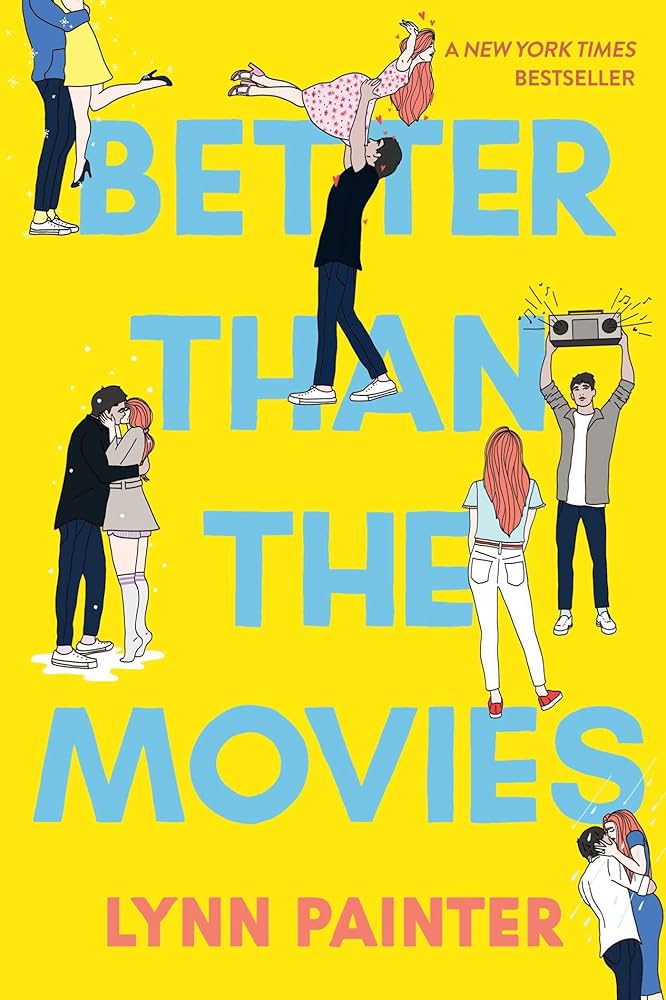
A Love Letter to Rom‑Coms (and Growing Up)
Some books feel like a warm blanket and a movie marathon rolled into one. I’m currently reading Better Than the Movies by Lynn Painter with one of my book clubs, and it’s been exactly the kind of comfort read that sparks equal parts swooning, laughing, and group-chat-worthy commentary. Better Than the Movies by Lynn Painter is exactly that kind of read — a YA rom‑com that wears its love for classic romantic comedies proudly on its sleeve while still delivering genuine emotional growth beneath the banter.
At its core, the novel follows Liz Buxbaum, a hopeless romantic who believes love should look exactly like the movies she grew up watching with her late mother. When her longtime crush moves back into town, Liz becomes determined to finally get her own cinematic love story — even if it means teaming up with her annoyingly charming next‑door neighbor, Wes Bennett, to make it happen.
What unfolds is a story that feels comfortingly familiar in structure, yet surprisingly heartfelt in execution.
Rom‑Com Tropes Done Right
Painter leans hard into beloved romantic comedy tropes — enemies‑to‑lovers, fake dating vibes, opposites attracting — but instead of feeling tired, they feel intentional and celebratory. The novel knows it’s a rom‑com and invites the reader to enjoy the ride.
The banter between Liz and Wes is the standout here. It’s quick, sarcastic, and genuinely funny, the kind of dialogue that makes you grin at the page. Their dynamic crackles with the kind of chemistry that rom‑com fans crave: tension layered with familiarity, irritation masking affection, and emotional intimacy sneaking in when neither character expects it.
What makes it work is that Painter gives these tropes emotional weight. The story isn’t just about getting the boy — it’s about understanding why Liz clings so tightly to the idea of movie‑perfect love in the first place.
Grief, Memory, and the Stories We Tell Ourselves
Beneath the sparkle and humor lies a quieter, more poignant theme: grief. Liz’s love of romantic movies is deeply tied to her relationship with her mother, who passed away when Liz was young. Those films become more than entertainment — they’re a way for Liz to stay connected to a version of love and happiness she fears she’s already lost.
This adds surprising emotional depth to the story. Liz’s obsession with her crush and her rigid expectations around romance aren’t shallow, they’re protective. She’s chasing certainty in a world that has already taken something irreplaceable from her.
Painter handles this gently, weaving grief into the narrative without overwhelming the lightness of the book. It’s a reminder that even the most bubbly love stories can carry quiet sadness underneath — and that healing doesn’t always look dramatic or linear.
Liz, Wes, and Emotional Growth
Liz is intentionally imperfect. She’s stubborn, impulsive, and often blinded by the version of her story she wants to believe. That can be frustrating at times — but it’s also what makes her growth feel earned.
Wes, meanwhile, is the ultimate slow‑burn love interest: observant, patient, and emotionally grounded in ways Liz isn’t ready for yet. What elevates his character is that he isn’t just there to fix Liz or wait around for her realization. He has his own boundaries, his own hurt, and his own expectations of what love should look like.
Their relationship ultimately becomes less about grand gestures and more about recognition — seeing someone clearly and choosing them anyway. In a book obsessed with movie moments, that message lands beautifully.
Why This Book Works
Better Than the Movies succeeds because it understands its audience. It’s written for readers who love romance, who grew up dreaming of cinematic love stories, and who are slowly learning that real love doesn’t always follow a script.
It’s funny without being shallow, romantic without being unrealistic, and emotional without tipping into melodrama. It’s the kind of book that feels especially fun to read with others — perfect for annotating, highlighting favorite banter, and debating whether Wes was always the answer (he was). Painter strikes a balance that makes the book feel both nostalgic and grounded — a rom‑com that acknowledges fantasy while gently nudging the reader toward something deeper.
Book Club Discussion Questions
Reading this with a book club adds an extra layer of fun, because Better Than the Movies naturally invites conversation — about love, expectations, and how much our past shapes the stories we want for ourselves. Here are a few questions that sparked (and will definitely continue to spark) discussion:
- Liz believes love should look like the movies she grew up watching. Do you think that belief helps her or holds her back? Where do you see that mindset show up in real life?
- How does Liz’s grief influence her choices, especially when it comes to Michael versus Wes?
- Wes is often described as the “obvious” choice to the reader early on. Did that make the story more satisfying for you, or did you wish for more uncertainty?
- The book celebrates rom-com tropes while also gently challenging them. Which tropes felt comforting, and which ones felt redefined?
- Do you think the ending feels more like a movie ending or a realistic one — and why?
Final Thoughts
If you love:
- Enemies-to-lovers dynamics
- Sharp banter and slow-burn chemistry
- Cozy, feel-good romance with emotional depth
- Stories about grief, growing up, and redefining love
…this book will absolutely work for you.
Better Than the Movies isn’t trying to reinvent the rom-com — it’s honoring it. And in doing so, it reminds us that sometimes the best love stories aren’t the ones we plan for, but the ones that quietly unfold right next door.
Cups & Curiosity Journal Prompt
Think about the stories you’ve absorbed about love — from movies, books, or even family memories.
- What did you believe love should look like when you were younger?
- Which of those beliefs do you still carry with you, consciously or not?
- Is there a version of love in your life right now that might be quieter, less cinematic, but more real?
Write freely for 5–10 minutes, without editing. Let yourself notice where fantasy has comforted you — and where reality might be gently asking for space.



 Cups & Curiosity
Leave a comment